How to Use Technical Analysis in Your Investment Research
Part 1: How to Use Technical Analysis in Your Investment Research
Investment research is an essential component of making informed investment decisions. One aspect of investment research that is commonly used by traders and investors is technical analysis. Technical analysis is a method of analyzing securities based on historical price and volume data to identify trends and patterns. By using technical analysis, traders can better understand the behavior of a security and make informed investment decisions.

Here are some ways to use technical analysis in your investment research:
Identify Trends: Technical analysis can help you identify trends in a security’s price movements. A trend is a pattern of price movements that shows the direction of a security’s price over a certain period of time. A security can be in an uptrend, downtrend, or sideways trend. By identifying the trend of a security, traders can make informed investment decisions.
Analyze Support and Resistance Levels: Technical analysis can also help you identify support and resistance levels. A support level is a price level where a security’s price tends to stop falling and start rising. A resistance level is a price level where a security’s price tends to stop rising and start falling. By analyzing support and resistance levels, traders can better understand the behavior of a security and make informed investment decisions.
Use Technical Indicators: Technical analysis also involves the use of technical indicators. Technical indicators are mathematical calculations based on a security’s price and/or volume data. These indicators can provide traders with information about the strength of a trend, the likelihood of a trend reversal, and other important information. Some popular technical indicators include moving averages, relative strength index (RSI), and stochastic oscillator.
Use Chart Patterns: Technical analysis also involves the use of chart patterns. Chart patterns are graphical representations of a security’s price movements over time. These patterns can provide traders with information about the behavior of a security and can help identify potential trading opportunities. Some common chart patterns include head and shoulders, triangles, and double bottoms.
Use Technical Analysis in Combination with Fundamental Analysis: Finally, it’s important to note that technical analysis should be used in combination with fundamental analysis. Fundamental analysis involves analyzing a company’s financial statements, earnings reports, and other relevant data to evaluate its overall financial health. By using both technical and fundamental analysis, traders can make more informed investment decisions.
In conclusion, technical analysis is an important tool for traders and investors. By using technical analysis, traders can better understand the behavior of a security and make more informed investment decisions. Whether you are a novice or an experienced trader, technical analysis can be a valuable addition to your investment research.
Next Part
Continuing from Part 1, here are some additional ways to use technical analysis in your investment research:

Use Multiple Timeframes: When using technical analysis, it is important to consider multiple timeframes. For example, you may analyze a security’s price movements on a daily chart, but also look at the weekly and monthly charts to gain a broader perspective. Analyzing multiple timeframes can help you identify longer-term trends and potential trading opportunities.
Monitor Volume: Volume is an important aspect of technical analysis. High trading volume can indicate strong buying or selling pressure, while low trading volume can suggest a lack of interest in the security. By monitoring volume, traders can better understand the behavior of a security and make more informed investment decisions.
Watch for Divergence: Divergence occurs when a technical indicator and the price of a security are moving in opposite directions. This can indicate a potential trend reversal or weakness in the current trend. By watching for divergence, traders can identify potential trading opportunities and adjust their investment strategies accordingly.
Use Risk Management: Like any investment strategy, using technical analysis involves risk. To manage risk, it is important to set stop-loss orders and have a clear exit strategy. Stop-loss orders can help limit potential losses in the event that a trade does not go as planned.
Continuously Learn and Adapt: Finally, it’s important to continuously learn and adapt your technical analysis strategies. The markets are constantly changing, and what works today may not work tomorrow. By staying up to date on market trends and continuously learning about new technical analysis techniques, traders can stay ahead of the curve and make more informed investment decisions.
In conclusion, technical analysis is a valuable tool for traders and investors. By using technical analysis in combination with fundamental analysis, monitoring multiple timeframes, watching for divergence, using risk management, and continuously learning and adapting, traders can make more informed investment decisions and improve their chances of success in the markets.
Last Part
In summary, technical analysis is a useful tool for traders and investors to analyze securities and make informed investment decisions. By using technical indicators, chart patterns, and analyzing support and resistance levels, traders can identify potential trading opportunities and manage risk. It is important to remember that technical analysis should be used in combination with fundamental analysis and that risk management is key to successful trading.
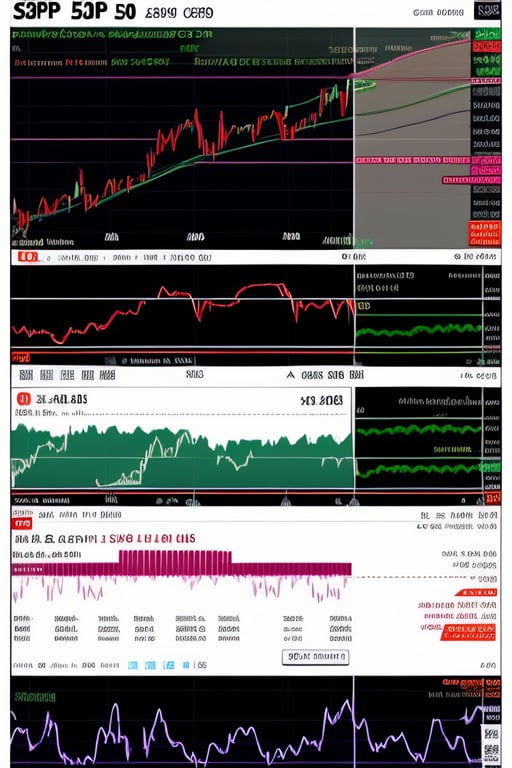
While technical analysis can provide valuable insights into the behavior of securities, it is important to recognize that it is not a perfect predictor of future price movements. Market volatility, unforeseen events, and other factors can impact the performance of securities in unexpected ways. Therefore, it is important to always conduct thorough research and have a clear investment strategy in place.
Ultimately, the key to successful trading and investing is to stay disciplined, patient, and continuously educate yourself on market trends and developments. With a solid understanding of technical analysis and a well-thought-out investment strategy, traders and investors can navigate the markets with confidence and improve their chances of success.
keywords = technical analysis, investment research, trading, investing, trends, support levels, resistance levels, technical indicators, chart patterns, risk management, price movements, market trends, multiple timeframes, trading volume, trend reversal, exit strategy


Comments
Post a Comment